The Chief Veterinarian reasonably believes the following:
This order and the actions listed are believed necessary under s. 39(1)(c)(1) of the Animal Health Act to address a condition that presents a significant risk of causing a threat to animal heath, specifically: Chronic Wasting Disease.
Background information:
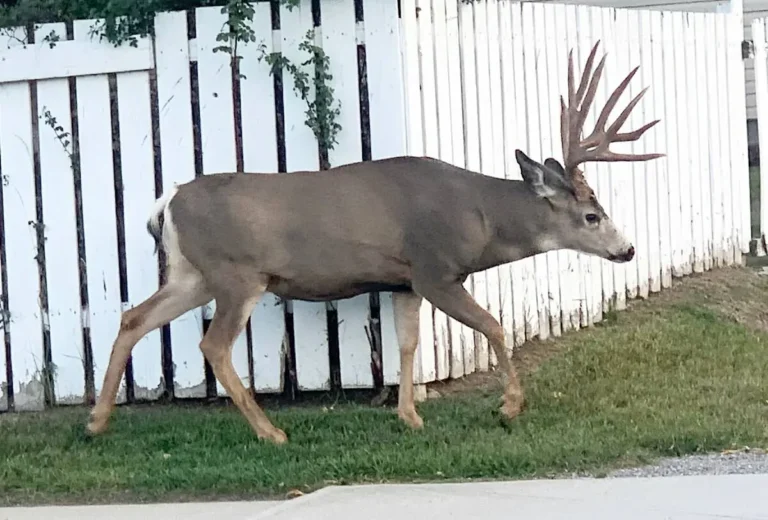
Chronic Wasting Disease (CWD) is a fatal infection that affects species in the deer family (cervids) such as mule deer, white-tailed deer, elk, moose and caribou. CWD is not a naturally occurring disease and can lead to declines in cervid populations. There is no vaccine or treatment and the disease is always fatal.
B.C.’s first detection of CWD was made in the Kootenay region in January 2024. In accordance with the Surveillance and Response Plan for CWD in B.C., actions are being taken to reduce risk of dissemination of infected materials by human activity, in order to reduce risk of disease spread to non-infected cervid populations.
CWD of cervids is prescribed as a reportable disease under the Animal Health Act.
Actions and Prohibitions: All persons subject to this order must take the following actions, and must comply with the following prohibitions:
- Samples from any Collected Cervid originating within the Area must be submitted to a government testing site or drop-off location for testing in accordance with Chronic Wasting Disease Surveillance and Testing – Province of British Columbia (gov.bc.ca). 2)
- Subject to section 3, the remaining, untested portions of any Collected Cervid originating from within the Area must not be removed from the Area or used for any purpose, and may only be either:
- transported to a Designated Disposal Site (defined below) for disposal, or
- transported to a storage location and held in a secure, leak-proof container, freezer or cooler inside the Area, until testing is complete and the result is confirmed negative for the presence of CWD.
- If the Collected Cervid originated from outside those portions of Wildlife Management Units 4-3, 4-4, 4-5 and 4-20 (“the Mandatory Negative Area”), outlined in red in the map attached at Appendix B (titled ‘2025 Mule Deer & White-Tailed Deer Cranbrook General Open Season’), it may be used as bait for the purpose of trapping, if the location in Latitude and Longitude or Universal Transverse Mercator (UTM) Coordinates of the bait location is:
- recorded,
- retained for a period of six months, and
- provided to a member of the Conservation Officer Service, an officer under the Wildlife Act or an inspector under the Animal Health Act, upon request.
- For certainty, and without limitation to section 2, Collected Cervids originating inside the Mandatory Negative Area cannot be used as bait for the purpose of trapping until testing is complete and the result is confirmed negative for the presence of CWD.
- Portions of any Collected Cervid which tests positive for CWD must be gathered if necessary, and held in a secure, leak-proof storage container until further instructions are received from the Ministry of Water, Land and Resource Stewardship.
- Each of the following is a “Designated Disposal Site”:
- Cranbrook Regional District Landfill;
- Creston Landfill;
- Ootischenia (Castlegar) Landfill;
- Ministry of Transportation and Infrastructure secure disposal sites; or
- The government collection site at 205 Industrial Road G, Cranbrook, B.C.
- Any Collected Cervid, or parts of a Collected Cervid, collected within the Area must not be kept, used, transported or disposed of other than in accordance with this order.
Authority for Order
This order is issued pursuant to sections 39, 40 and 41 of the Animal Health Act.
Termination of Order
This Order terminates on the following date or in the following circumstances: (If no date or circumstance stated, refer to section 50 of the Animal Health Act. See Appendix C)
Contact Information
Name and contact information of inspector making order:
Theresa Burns, Chief Veterinarian
Chief.Veterinarian@gov.bc.ca
Orders
You have been issued an order. Failure to comply with an order is an offense under s. 81 of the Animal Health Act. If this order is posted, you must not remove, alter, or deface it. If an inspector believes that you are not adequately complying with this order, an inspector is authorized to enter into the place described in this document and take action to ensure this order is carried out. You are liable for all costs of any work that the inspector authorizes to be carried out to ensure compliance with this order. You may request reassessment, reconsideration, or review of this order. A request must be in the form and manner required by the Chief Veterinarian.
Reassessment
You may request the issuing inspector to reassess the circumstances under which this order was made, assess the extent to which it has been complied with, and determine if it continues to be necessary. The inspector may decide to confirm, vary, or terminate this order.
Reconsideration
If you have additional relevant information which was not available when the inspector made the order you may request the issuing inspector to reconsider this order. The inspector may
- Vary, confirm, or rescind this order;
- Delay the date the order takes effect or suspend the order, if this will not be a risk to animal or public health; or,
- Reject your request if the information is not new or not relevant.
This order continues to be in effect while the inspector reconsiders it unless the inspector agrees in writing to suspend it. You will receive written reasons for the reconsideration decision. You may not request a second reconsideration.
Review
If you have completed a request for reconsideration you may request a review of this order. This review will be based on the existing record. The reviewer may
- Vary, confirm or rescind the order; or
- Delay the date the order takes effect or suspend the order, if this will not be a risk to animal or public health; or,
- Refer the matter back to the person who made the order, with or without directions.
The order continues to be in effect during the review. You will receive written reasons for this decision. You may not request further review under the Animal Health Act, but may have other recourse.
THE INFORMATION REQUESTED ON THIS FORM IS COLLECTED AND MAY BE DISCLOSED UNDER THE AUTHORITY OF PART 2 AND 3 OF THE ANIMAL HEALTH ACT. IF YOU HAVE ANY QUESTIONS ABOUT THE COLLECTION AND USE OF THIS INFORMATION, PLEASE CONTACT THE MINISTRY OF AGRICULTURE AND FOOD.
Appendix A

Appendix B

Appendix C
Section 50 of the Animal Health Act states
50 An order ceases to have effect on the date or in the circumstances stated in the order, or if no date or circumstances are stated, as follows:
- If an order is served by posting the order, or notice of the order, in or on a place, on the date the order or notice is removed from the place by the minister or the inspector who made the order, or by a person acting under the direction of either of them;
- If an order is served by publishing the order, or notice of the order, on the date the inspector who made the order publishes a notice that the order has been terminated;
- If an order is made under section 41 (m) [general orders], on the date the person subject to the order provides evidence of compliance as required by the order;
- In any other case, on the date the inspector who made the order provides notice by any means to the person subject to the order that the order is terminated.
The original copy of this document is available here. It was published on this page.