This project is an initiative by Hunters for BC focused on slowing the spread of Chronic Wasting Disease in British Columbia.
We’re hunters, volunteers, and conservationists taking action for wildlife in British Columbia. Your donation helps protect the wildlife, wild spaces, and hunting heritage that make this a unique place.
This project is heavily self-funded; it is a passion project for us. Your donation goes a long way. Thank you; your support is greatly appreciated.
Join us in keeping the Hunt. Gather. Conserve. spirit alive.
Donate Today
Is genetic resistance our CWD saviour? Not quite.
Some deer carry genes that help them resist chronic wasting disease, but no gene makes a deer immune - and resistance can bring problems of its own. Here is what the science says and what it means for BC hunters.
Jessica Russell has spent her career managing and planning responses for large disease and invasive pest incursions at the national level in New Zealand and in Canada. She translates disease management theory into application and has planned successful responses to primarily animal health threats but also plant pests, foodborne outbreaks and adverse events. Highlights include leading the eradication of Gumboro disease from New Zealand’s poultry sector, planning and overseeing the response to New Zealand’s largest ever outbreak of Salmonella Enteritidis, and developing the management research programme for the newly introduced granulate ambrosia beetle. Within Canada, she has supported the Planning Epidemiology Unit of the Highly Pathogenic Avian Influenza Response with the CFIA, and supports the Province’s response to Chronic Wasting Disease in BC.
You may have heard the rumours: “Some deer are immune to CWD” or “nature will sort it out if we give it time.” Sounds like a silver bullet, right? Unfortunately, the science tells a more complicated story.
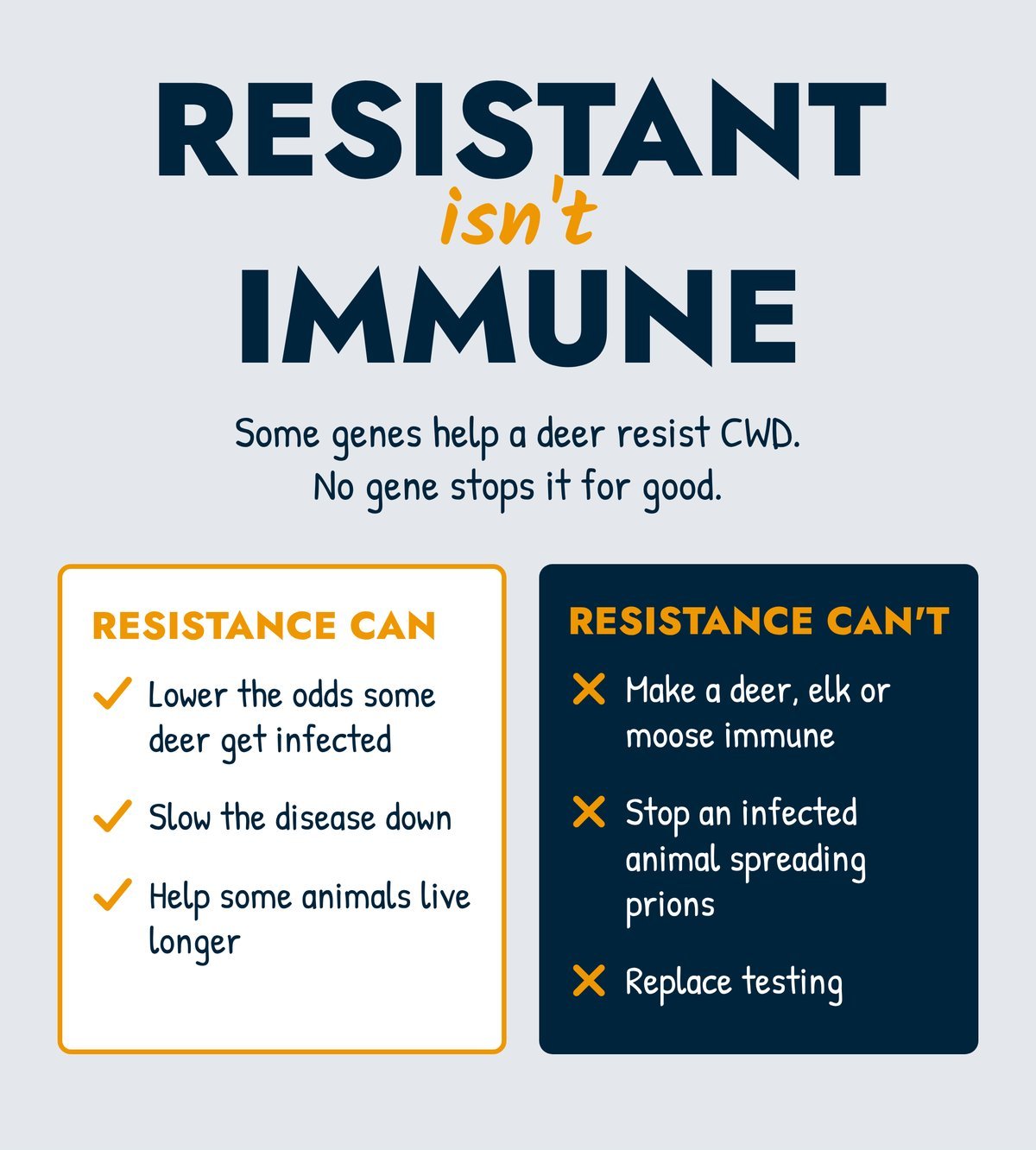
Some deer have genetic variations that make them less likely to become infected with chronic wasting disease (CWD), or slow the disease once they’re infected. But no known gene makes a deer immune to CWD.
What benefits an individual animal might not be such good news for the rest of the herd.
Jessica Russell, Response Planning Specialist
First, what’s a prion anyway?
Despite their bad reputation, normal prion proteins are an important part of the body, particularly the nervous system, where they help nerve cells function.
Trouble starts when these proteins fold into the wrong shape. These misfolded proteins, called prions, cause neighbouring proteins to misfold too, creating a chain reaction that damages the brain.
In deer, elk and moose, this disease is called CWD. Similar diseases include scrapie in sheep and goats, “mad cow disease” in cattle, and Creutzfeldt-Jakob disease in humans.
So, where do genetics come in?
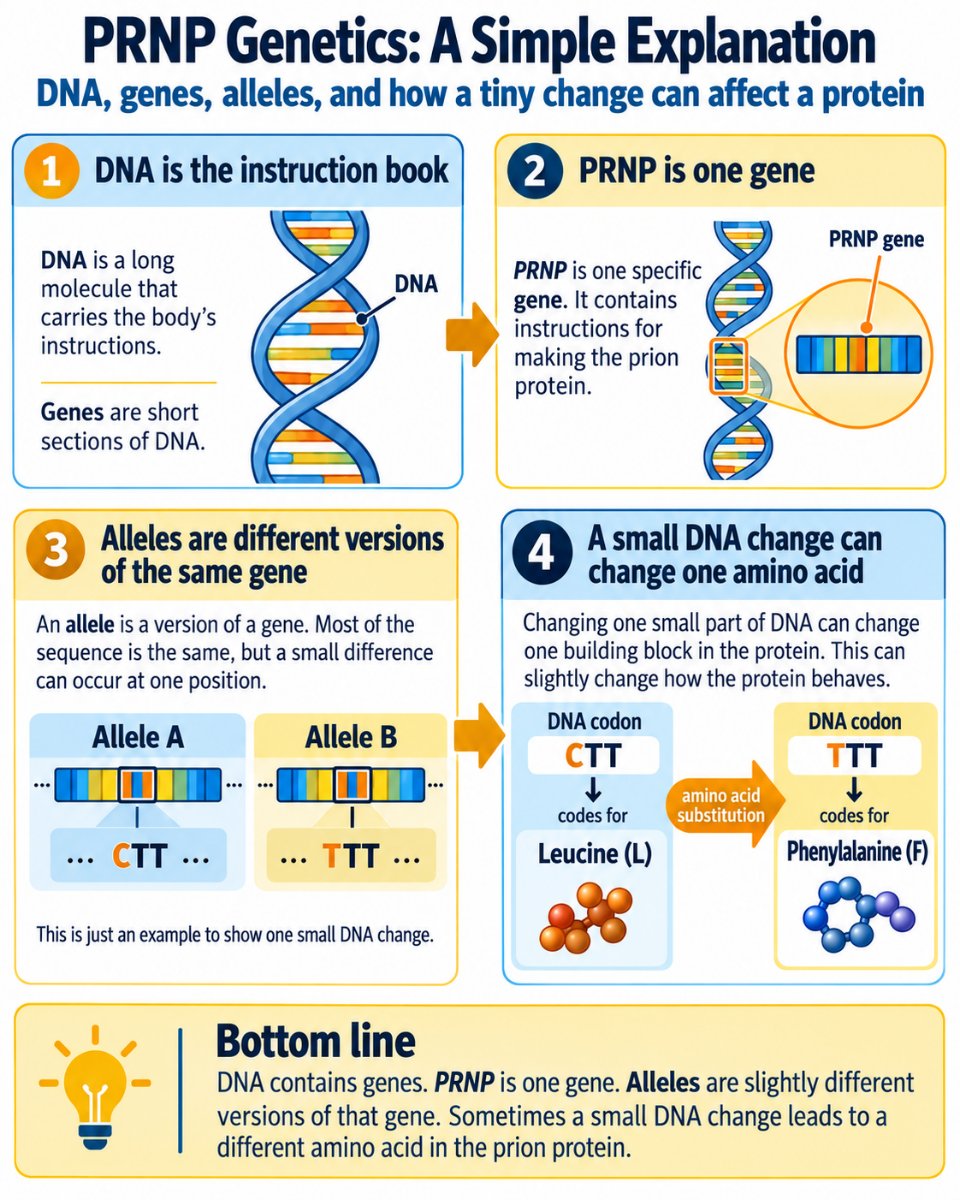
Think of DNA as an instruction book. Genes are individual sets of instructions, and one gene, called PRNP, tells the body how to make the prion protein.
Animals inherit two copies of this gene, one from each parent. Sometimes those copies have slightly different instructions, which scientists call alleles. These differences can change the building blocks (amino acids) that make up a protein, affecting how easily it misfolds.
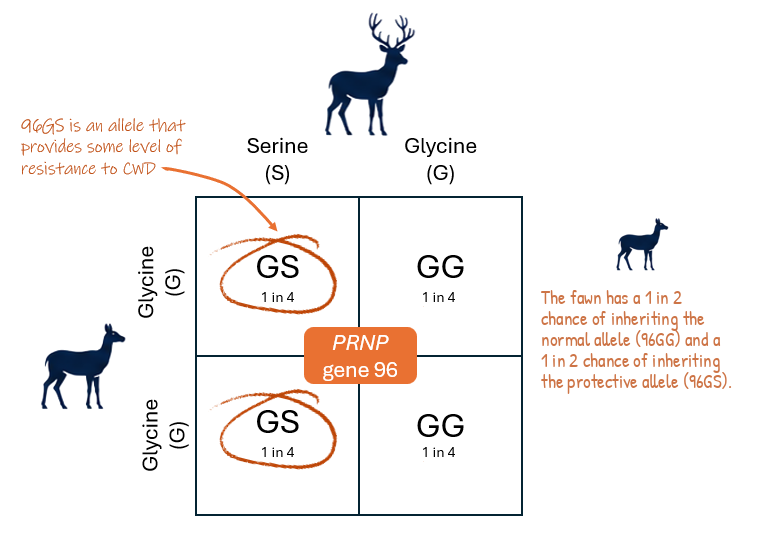
Scientists identify these variations using numbers and letters. For example, white-tailed deer may have the 96GG allele, 96GS or 96SS. The number identifies the position in the protein, while the letters identify which amino acids they inherited from each parent.
Researchers have studied several variations in white-tailed deer, mule deer and elk that appear to offer some resistance to CWD. Less is known in moose or caribou.
Studies comparing the genetics of CWD-positive and CWD-negative animals regularly find that certain “resistant” genes are less common in infected animals. In some comparisons, deer carrying particular variations were up to four times less likely to test positive for CWD.
Sounds promising! But there’s a catch.
What’s the downside of resistance?
While some variations may reduce the likelihood of infection, others primarily slow disease progression. None provide complete protection against CWD.
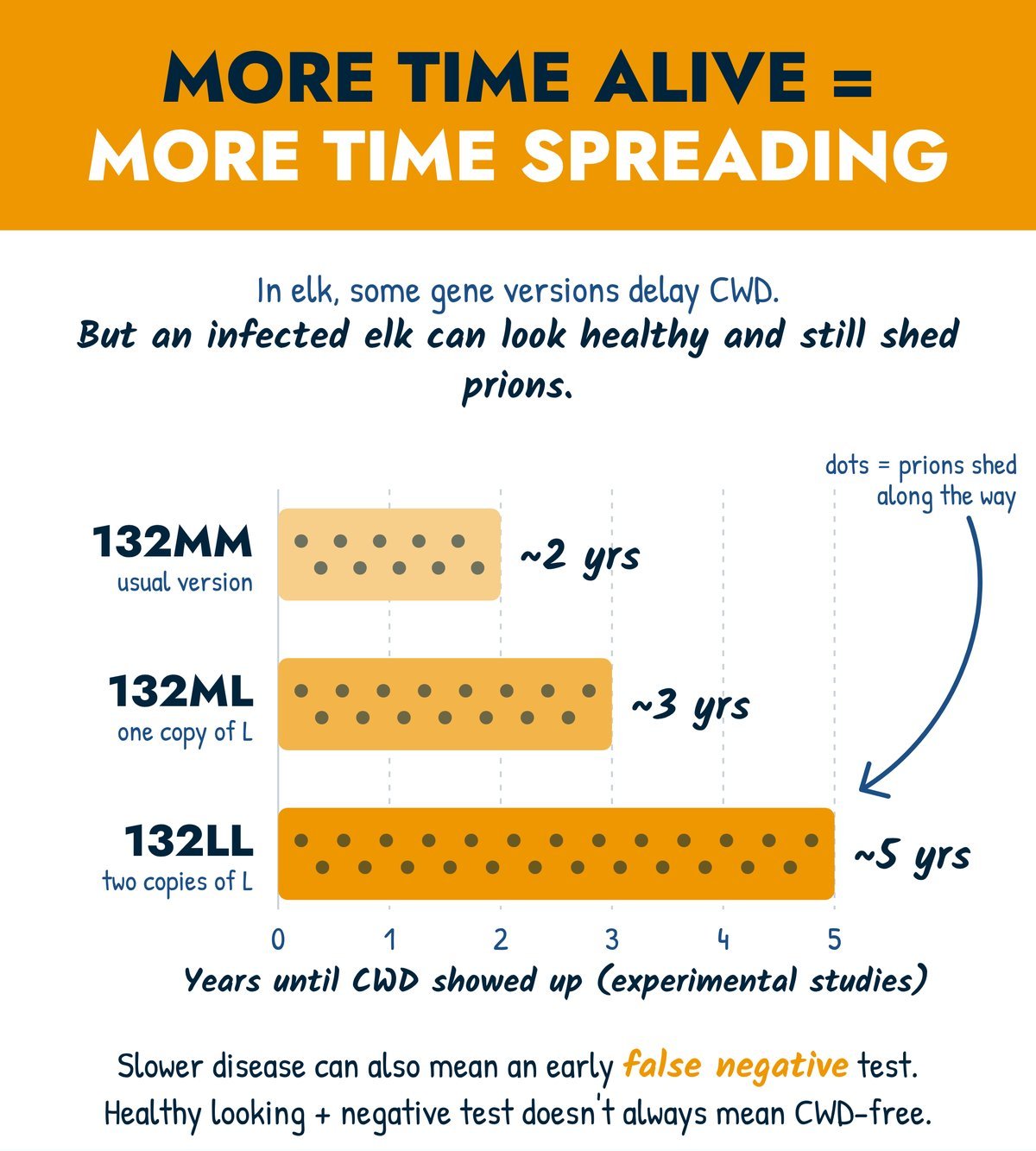
An infected animal with one of these variations may live longer before showing symptoms or dying. That sounds positive, particularly if it gives the animal more opportunities to reproduce. But it also gives the animal more time to spread CWD through saliva, urine, droppings and the environment.
Remember, CWD already has a long incubation period, often lasting several years. During this time, infected animals can appear perfectly healthy while spreading prions. Some genetic variations can stretch this period even further.
To complicate things, slower disease progression can also mean prions take longer to accumulate in the tissues used for CWD testing, potentially leading to false-negative results. With these alleles, a deer that looks healthy and tests negative isn’t necessarily free of CWD.
Well-studied genetic variants of the PRNP gene
Species
Codon location
Normal (wildtype)
Variation
Impact
White-tailed deer
96
Two glycine (96GG)
Serine (S) instead of the regular glycine (G) (96GS or 96SS)
Compared to 96GG, a single S more than halves the likelihood of being infected, and double S reduces the likelihood even more. Extends survival time by approximately 9-12 months.
95
Two glutamines (95QQ)
Histidine (H) instead of the regular glutamine (Q) (95QH or 95HH)
Significantly lengthened incubation time. Survival increased to more than 4 years post-infection.
Mule deer
225
Two serine (225SS) Serine homozygous
Phenylalanine (F) instead of the regular serine (S) (225SF or 225FF)
Less likely to test positive for CWD, and the disease generally develops more slowly. The rare 225FF type can make CWD harder to detect through testing. One infected 225FF deer survived almost 5 years after exposure.
Elk
132
Two methionine (132MM)
Leucine (L) instead of the regular methionine (M) (132ML or 132LL)
Delayed disease onset, longer for prions to accumulate in lymph nodes. In experimental studies, disease developed after roughly 2 years for 132MM, 3 years for 132ML, and 5 years for 132LL.
Won’t nature eventually sort this out?
Possibly over the very long term, but not necessarily in the way we’d hope.
Scientists have found evidence that certain resistance-associated genes, including 96S in white-tailed deer and 225F in mule deer, are slowly becoming more common in some CWD-affected populations.
This makes sense: animals that survive longer may reproduce more, passing those genes to future generations. That’s natural selection at work!
However, if these animals remain infected and spread prions for longer, CWD could become even more widespread and increase the prevalence level to new highs. This is particularly concerning for populations moving between areas, potentially introducing the disease to previously unaffected herds.
And there’s another catch: genetics is complicated.
But surely resistance is a good thing?
Not always. Genes can have unexpected effects, and what’s beneficial in one situation may be harmful in another.
Take mule deer, for example. Most have an allele called 225SS. A smaller number have 225FS, and an even rarer group have 225FF. While 225FF animals can show unusually slow CWD progression, research has also found concerning disadvantages, including poorer body condition and survival. In one study, the handful of animals that had this rare 225FF variation all died prematurely before developing CWD.
In other words, a genetic variation that offers some protection against CWD may create other health problems. Artificially increasing these rare genes through selective breeding could therefore have unintended consequences.
Could playing God backfire?
Evolution is an arms race. Just as animals evolve ways to resist disease, disease agents can change too to counteract the host’s resistance.
Researchers have already identified a CWD strain called H95+ that emerged in studies involving highly resistant genetic PRNP variations. This strain has different properties from other CWD strains and demonstrates how host genetics can influence disease evolution.
This raises an important question: if we deliberately breed animals for particular resistance genes, could we encourage CWD strains that overcome that resistance?
Similar breeding programs have successfully reduced scrapie in farmed sheep, so genetic approaches deserve further research. But what works for sheep may not work for cervids, particularly wild populations.
There are concerns about reducing genetic diversity, encouraging undesirable traits and potentially influencing the emergence of new CWD strains. Scientists are also studying whether these emerging strains could affect different or novel species.
Genetic resistance is an exciting area of research, but it’s no silver bullet.
Jessica Russell, Response Planning Specialist
What does this mean for hunters?
British Columbia is currently genotyping animals submitted for CWD testing to better understand how common these genetic variations are in wild populations.
While scientists continue investigating whether genetics can help manage CWD, hunters remain one of our most important tools for protecting wild cervids.
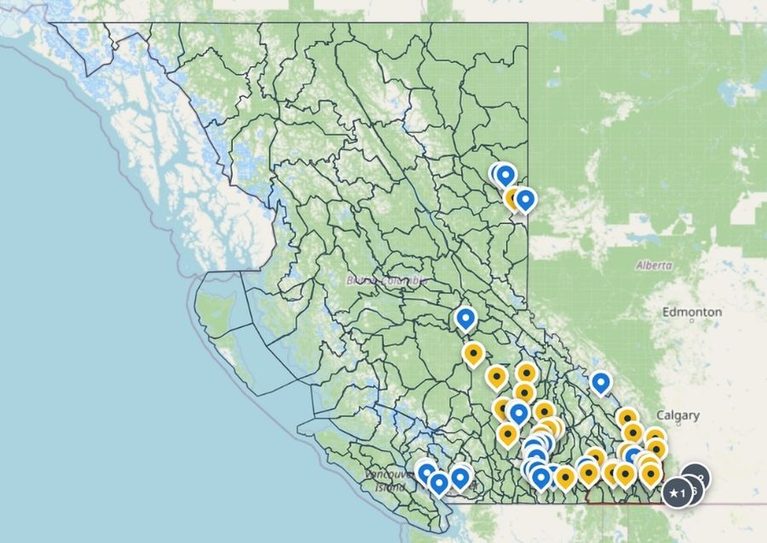
Get your deer, elk and moose tested. It’s free! Find your nearest drop-off freezer at cwdbc.ca/map.
Hunting in a CWD Management Zone? Remember that testing is mandatory and the brain and spine must remain within the zone.
The bottom line? Some genetic variations may help individual animals resist CWD or survive longer with it. But they won’t make CWD disappear, and they could bring unexpected problems.
Until we know more, responsible hunting, testing and preventing the spread of CWD remain our best defence.
References
Haley, N. J., Merrett, K., Stein, A. B., et al. (2019). Estimating relative CWD susceptibility and disease progression in farmed white-tailed deer with rare PRNP alleles. PLOS ONE, 14(12), e0224342. https://doi.org/10.1371/journal.pone.0224342
Johnson, C. J., Herbst, A., Duque-Velasquez, C., Vanderloo, J. P., Bochsler, P., Chappell, R., & McKenzie, D. (2011). Prion protein polymorphisms affect chronic wasting disease progression. PLOS ONE, 6(3), e17450. https://doi.org/10.1371/journal.pone.0017450
Pilot, W., Arifin, M. I., Staskevicius, A., Haley, N. J., Mitchell, G., & Guan, J. (2025). White-tailed deer prion protein gene variability suggests selection against chronic wasting disease in Canada’s Prairies. Viruses, 17(8), 1121. https://doi.org/10.3390/v17081121
Williams, A. L., Kreeger, T. J., & Schumaker, B. A. (2014). Chronic wasting disease model of genetic selection favoring prolonged survival in Rocky Mountain elk (Cervus elaphus). Ecosphere, 5(5), 60. http://dx.doi.org/10.1890/ES14-00013.1
Wolfe, L. L., Fox, K. A., & Miller, M. W. (2015). “Atypical” chronic wasting disease in PRNP genotype 225FF mule deer. Journal of Wildlife Diseases, 50(3), 660–665. doi:10.7589/2013-10-274
Duque Velásquez, C., Kim, C., Herbst, A., Daude, N., Garza, M. C., Wille, H., Aiken, J., & McKenzie, D. (2015). Deer prion proteins modulate the emergence and adaptation of chronic wasting disease strains. Journal of Virology, 89. https://doi.org/10.1128/jvi.02010-15
Duque Velásquez, C., Kim, C., Haldiman, T., Kim, C., Herbst, A., Aiken, J., Safar, J. G., & McKenzie, D. (2020). Chronic wasting disease (CWD) prion strains evolve via adaptive diversification of conformers in hosts expressing prion protein polymorphisms. Journal of Biological Chemistry, 295(15), 4985–5001. https://doi.org/10.1074/jbc.RA120.012546
Herbst, A., Velásquez, C., Triscott, E., Aiken, J. M., & McKenzie, D. (2017). Chronic wasting disease prion strain emergence and host range expansion. Emerging Infectious Diseases, 23(9), 1598–1600. https://doi.org/10.3201/eid2309.161474
H4BC Hunt.Gather.Conserve. Society recognizes the Habitat Conservation Trust Foundation for making a significant financial contribution to support Strengthening Hunter Participation in CWD Surveillance and Compliance. Partnerships are key to conserving BC’s wildlife, fish, and their habitats.