What is Chronic Wasting Disease?

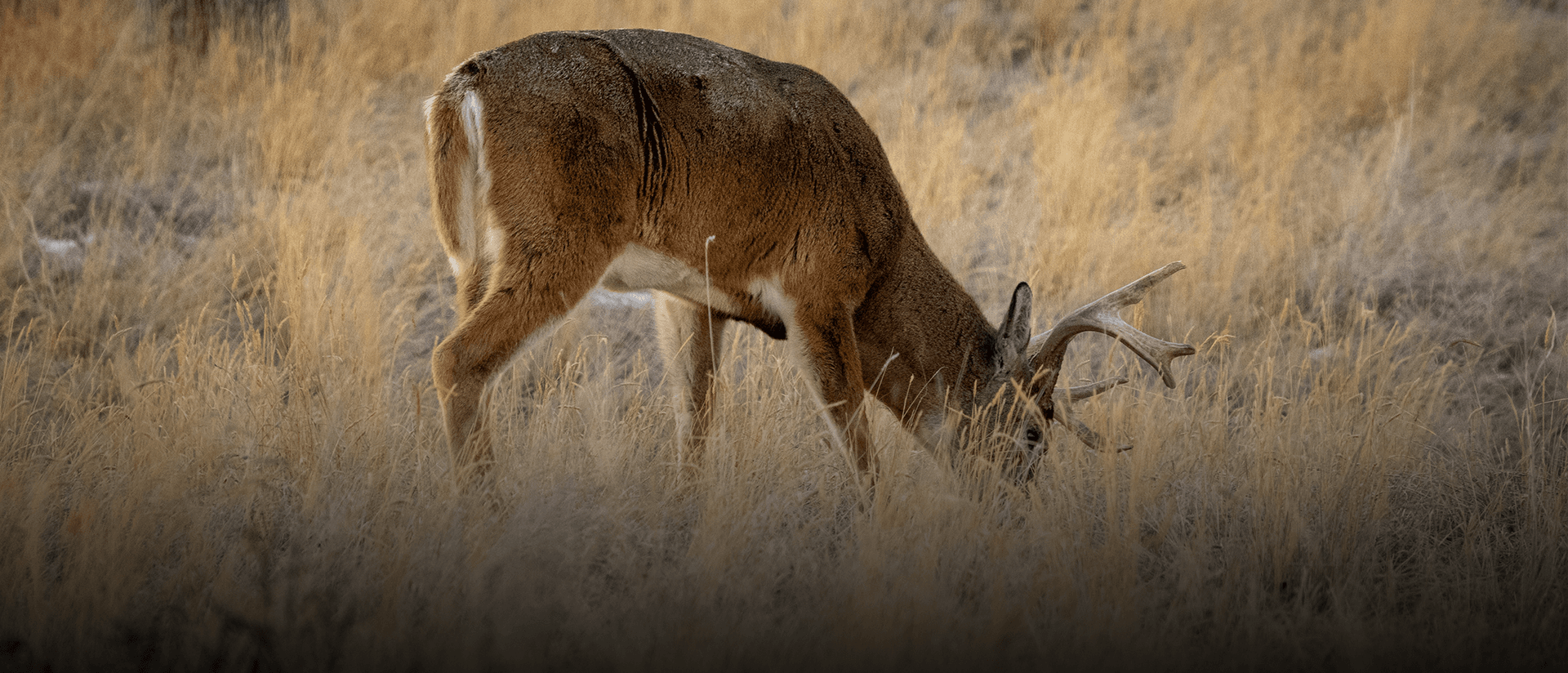
Chronic wasting disease (CWD) is a fatal disease of the deer family – mule deer, white-tailed deer, elk, moose and caribou. There is no treatment, no vaccine and no cure. CWD was first detected in British Columbia in January 2024, and every confirmed case so far has been found in the Kootenay region.
Chronic Wasting Disease in British Columbia
WHAT DO CWD SYMPTOMS LOOK LIKE?
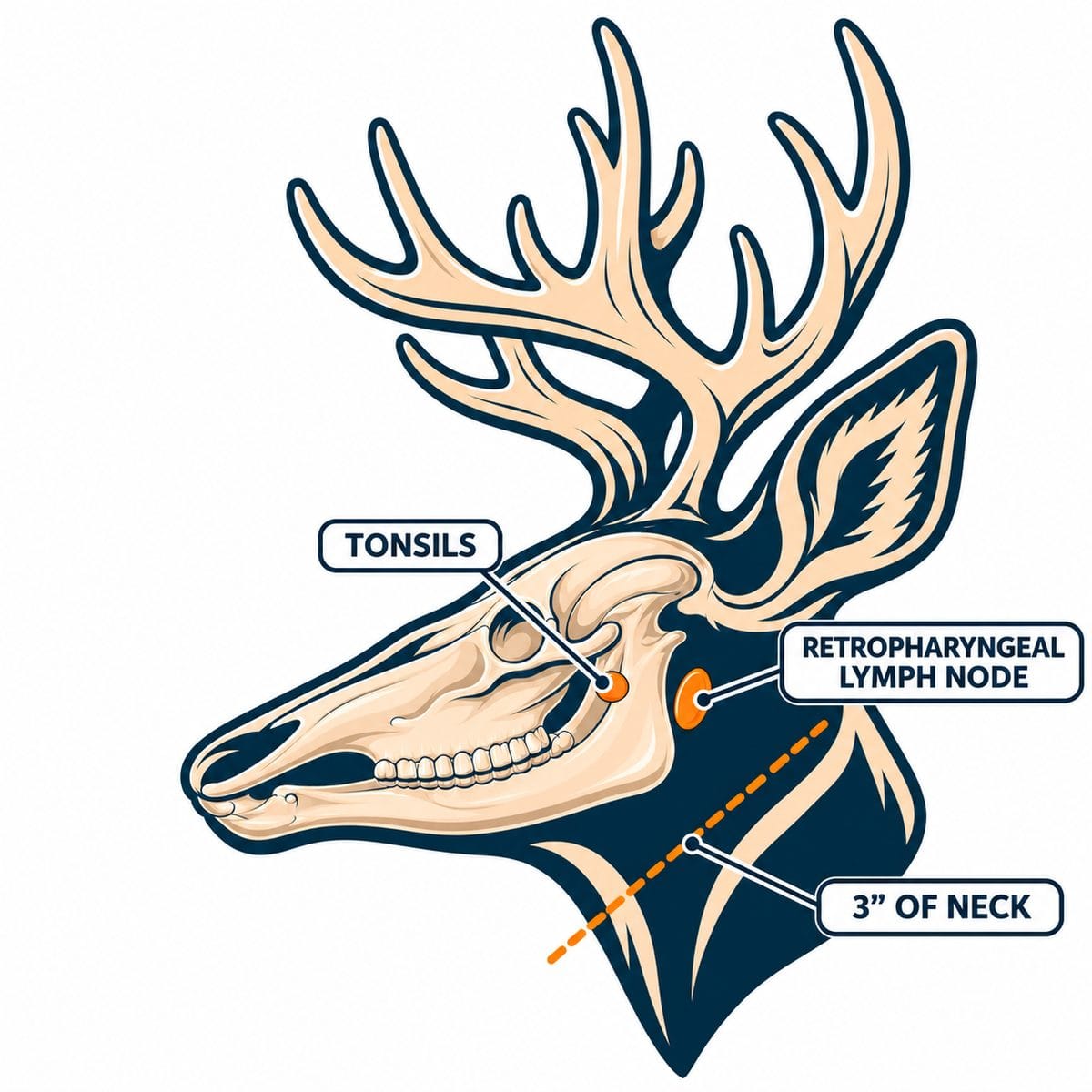
Where to take CWD samples from an elk or moose head

What Causes CWD?

CWD is caused by a prion – a misfolded protein, not a virus or a bacteria. Prions cause normal proteins in an animal’s brain and nervous system to fold the wrong way, slowly damaging the brain until the animal dies. CWD is in the same family of diseases as mad cow disease (BSE) in cattle and scrapie in sheep.

Prions are extremely tough. They are not destroyed by cooking, freezing, smoking or most disinfectants, and they can stay infectious in soil and on plants for years.

Always Fatal, No Cure

Caused by Prions

Survives Cooking and Freezing

Infected Animals Can Look Healthy

First Found in BC in 2024

Understanding CWD

Animal to animal: through saliva, urine, feces and other body fluids, especially where deer gather close together.

Through the environment: prions build up in soil and plants where animals concentrate, like feeding sites and salt licks, and stay there for years.

Through carcasses: brain, spinal cord and lymph nodes from an infected animal can contaminate the ground where they are left or dumped.

By people moving carcasses: transporting carcass parts out of an infected area is one of the main ways CWD jumps to new places. That is why BC has carcass transport restrictions in the CWD Management Zone.

Most of the time, it looks completely normal. An infected deer can look healthy for a year or more while it spreads prions to other animals and the landscape. That is why testing matters – you cannot tell by looking.

In the late stages, infected animals may show extreme weight loss (the “wasting”), drooling, excessive drinking and urination, stumbling or poor coordination, a drooping head or ears, and little fear of people.

If you see a deer, elk or moose acting sick, report it to the BC Wildlife Health Office at 250-751-3219 or CWD@gov.bc.ca. Note the location and take a photo if you can.

There is no direct evidence that CWD can be transmitted to humans. However, Health Canada and the World Health Organization recommend that people do not eat meat from an animal infected with CWD, as a precaution.

Get your animal tested if it was harvested in or near the CWD Management Zone, and wait for a negative result before eating it. Never eat an animal that looked sick. Wear gloves when processing, bone out the meat, and avoid cutting through the brain, spinal cord, spleen and lymph nodes. Don’t feed raw high-risk parts to pets.

CWD moves slowly, which is exactly what makes it dangerous. In parts of Alberta, Saskatchewan and the western United States, where CWD has been present for decades, infection rates in some deer herds have climbed high and research links the disease to population declines, especially in mule deer.

BC still has a chance to keep CWD rare and contained. That matters for our deer and elk, for at-risk caribou herds, for First Nations food security and for every family that fills the freezer in the fall.

January 2024: First two cases confirmed – a mule deer buck and a white-tailed doe from south of Cranbrook.

2024: The province creates a CWD Management Zone in the Kootenay region, with mandatory testing in certain management units and carcass transport restrictions.

December 2025: Two more cases confirmed in the Kootenays. A suspected case near Enderby in the Okanagan tested negative.

January 2026: A ninth case is confirmed in a white-tailed deer near Jaffray. A deer density reduction hunt near Cranbrook (January 5-31, 2026) found no new detections. See the CWD Management Zone Maps.

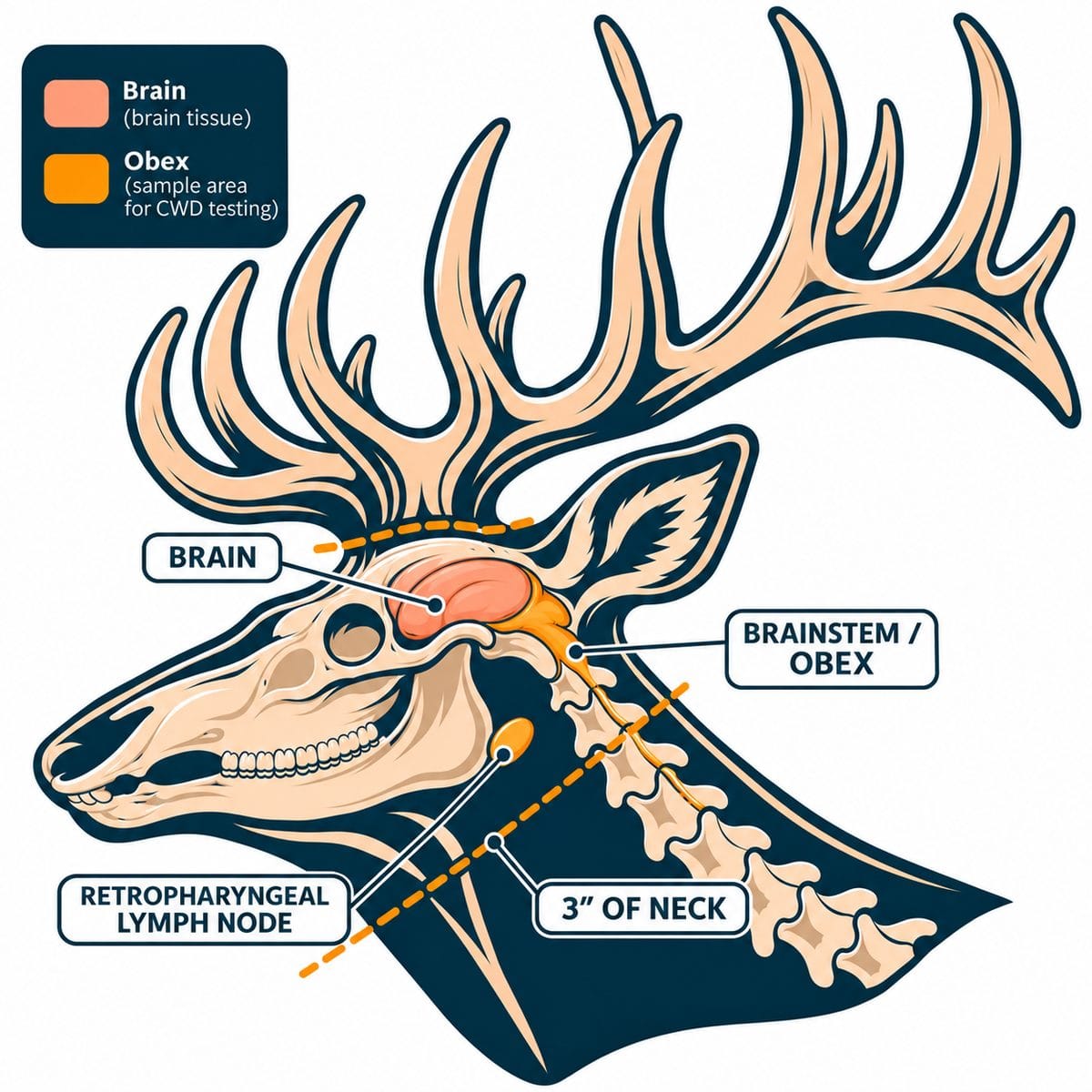
Where to take CWD samples from a deer head

How to Test for CWD

Binoculars

What Hunters Can Do

Hunters are the best tool BC has for finding and managing CWD. Submit a sample (it’s free), follow carcass transport rules, dispose of carcass parts at designated sites, don’t feed wildlife or put out salt licks, report sick animals, and hunt in the known CWD area to reduce deer density.

Common Questions About CWD

Is it safe to eat deer meat in BC?
CWD has only been found in the Kootenay region. If your animal came from in or near the CWD Management Zone, get it tested and wait for a negative result before eating it. Never eat an animal that looked sick.

Does cooking or freezing kill CWD?
No. Prions survive cooking, freezing and smoking. Testing is the only way to know.

Is CWD the same as “zombie deer disease”?
Yes, “zombie deer disease” is a media nickname for CWD. Infected animals are not aggressive – they become thin, weak and uncoordinated.

Can CWD spread to cattle, horses or pets?
CWD is only known to naturally infect members of the deer family. As a precaution, don’t feed raw high-risk parts like brain or spinal cord to dogs.

Where can I get my deer tested?
See our Sample Drop Off Locations and the Find a Freezer map. More answers in our CWD FAQs.

Ask a Biologist

This is YOUR resource. Your engagement helps improve this website!

Have a question about Chronic Wasting Disease? Ask away!

Want clarification on a rumour? We are here for that!

Ask a Question
Share Information
Name(Required)
Email(Required)
Please let us know what's on your mind. Have a question for us? Ask away.

Project Supported By

Hunters for BC

Eat wild