Want to Make a Donation?

This project is an initiative by Hunters for BC focused on slowing the spread of Chronic Wasting Disease in British Columbia.

We’re hunters, volunteers, and conservationists taking action for wildlife in British Columbia. Your donation helps protect the wildlife, wild spaces, and hunting heritage that make this a unique place.

This project is heavily self-funded; it is a passion project for us. Your donation goes a long way. Thank you; your support is greatly appreciated.

Join us in keeping the Hunt. Gather. Conserve. spirit alive.

Donate Today

Your Role as a Hunter

We are in a window of opportunity where your efforts can have a significant impact on the spread of Chronic Wasting Disease in British Columbia. At 1% prevalence, the disease is manageable. CWD management efforts become less effective once the disease prevalence in an area exceeds 5%. Published models generally predict that CWD has a population-level impact when its prevalence within the herd exceeds 25%.
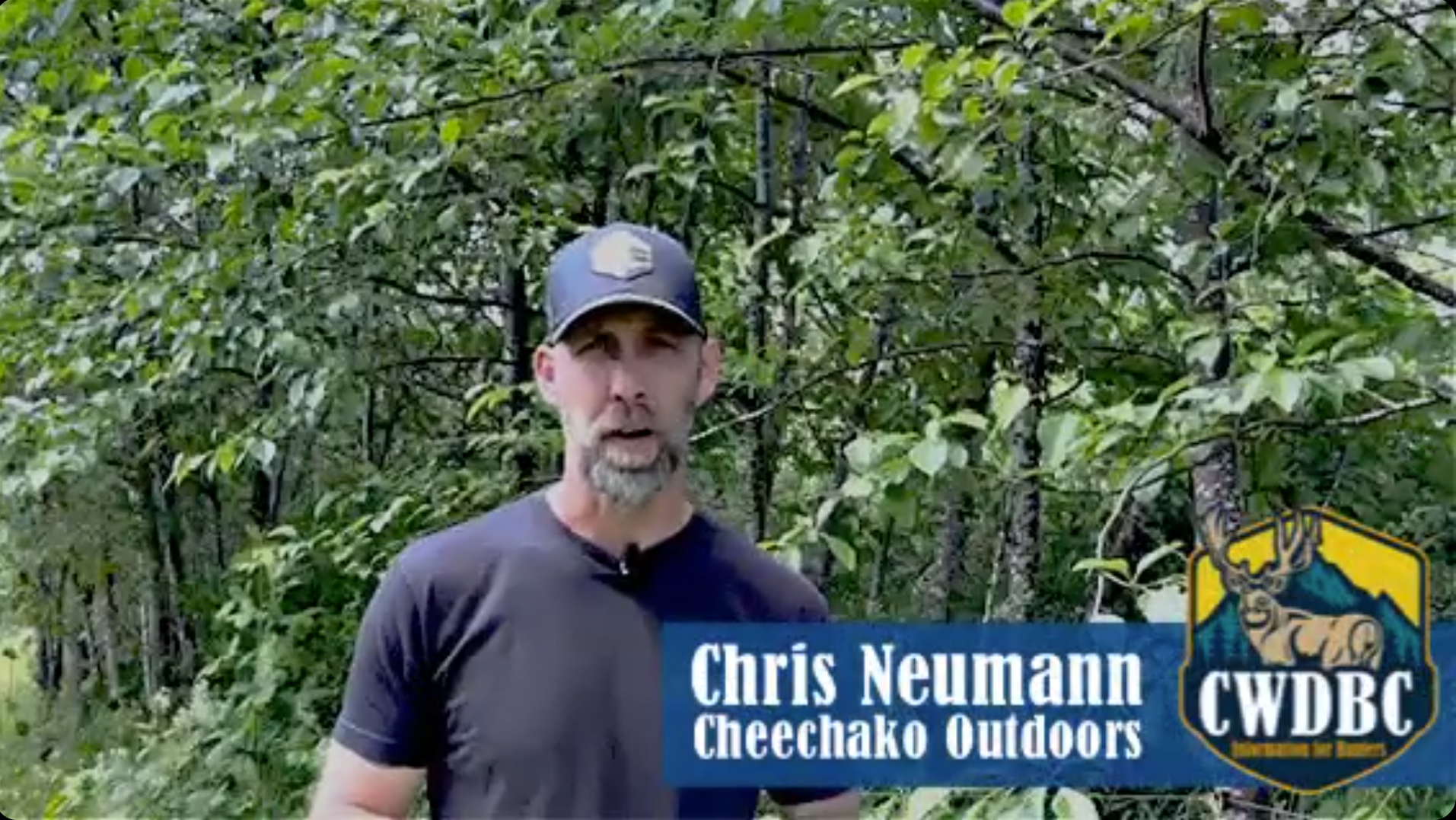
CWDBC: YOUR ROLE AS A HUNTER
Chris Neumann of Cheechako Outdoors on a Mule Deer Hunt explains your Role as a Hunter in regards to CWD.

How Hunters Help Reduce the Spread of CWD

Hunters are an important tool in Chronic Wasting Disease (CWD) management. We reduce the number of cervids in the CWD zone through selective harvest. This density reduction slows the spread of the disease and contamination of the environment.

By Hunting CWD Regions

By Disposing of Carcasses

By Submitting Samples

By Providing Surveillance

By Reporting Sick Animals

How Hunters Help Reduce the Spread of CWD

By participating in legal hunts, hunters reduce populations of cervid in affected regions. Limiting densities decreases interaction and has been proven an effective management strategy. This action alone is a powerful way to slow the spread of CWD.

Infected animals will shed prions into the environment around them (through bodily fluids). All parts of the carcass may contain prions. As such, vectors for disease spread can include live infected animals, infected carcasses and contaminated material, such as hay or equipment. Natural animal movement can spread disease locally.

By temporarily increasing harvest rates in CWD regions we reduce potential carriers of the disease thereby slowing the spread of the disease.

Hunters can transport carcasses and contaminated materials farther distances. This allows CWD to “hop” regions.

Dispose of the remains of all harvested animals in a way that reduces the chance of spreading CWD. Burning or chemical treatment will not destroy infective CWD prions and throwing a carcass or carcass parts out in a back field for scavengers will only contaminate the site if the animal was CWD positive.  

Hunters should not transport carcasses away from the harvest location. Leaving your carcass at the harvest location reduces the chances of CWD being spread by hunters.

While it is not mandatory, we recommend burying any potentially CWD affected carcasses. This reduces the risk of CWD being transported by scavengers.

Hunters are responsible for providing the majority of the samples for CWD testing. Every time you submit a sample you help provide us with a cleared picture of how the disease is spreading and where we need to ramp up management.

It is a condition of the general hunting license that all license holders who harvest a deer, elk or moose, under the authority of a species license in a CWD Management Unit , deposit samples (the head or portion of the head) in a designated drop-off location within the CWD Management Zone.

Surveillance is a critical component of disease prevention and management. Since 2002, the BC CWD Program has conducted CWD surveillance in free-ranging cervid populations, including deer, elk, moose and caribou. The majority of samples are collected from hunter harvested animals, but it is also critical to test cervids collected from other sources such as those involved in vehicle collisions.

Hunters are encouraged to voluntarily submit harvested deer, elk, and moose from all regions of B.C. for testing. The Kootenay and Peace Regions are target areas for testing because these areas are at higher risk based on proximity to positive cases outside of B.C

Hunters are the eyes on the ground. Animals exhibiting signs of strain or fatigue are likely nearing the final stages of the disease preceeding death. It is important that you report any cervid exhibiting signs of strain or fatigue.

If you observe an animal exhibiting signs of strain or fatigue please report it to the RAPP line at 1-877-952-7277 or the BC Wildlife Health Program at CWD@gov.bc.ca or 250-751-3219.

The Role of a Hunter in the Safe Handling of Meat in CWD zones.

Safe Handling of Meat and Samples

Binoculars

Hunt CWD Areas

Your hunting presence in CWD areas reduces the chances of CWD spreading to new areas.

What’s the point of hunting in a CWD area if the meat might not be safe to eat?

It’s a valid question, but simply put, if hunters stop hunting in CWD regions, the disease will spread more quickly into unaffected regions. Harvesting deer in the CWD management area limits the number of hosts that can carry and transmit the disease. You have the opportunity as a hunter to make a difference. We hope you’ll rise to the challenge.

In most areas where CWD occurs, relatively small numbers of animals are infected. This makes it extremely unlikely you will harvest a deer infected with CWD. To maintain low infection rates, we must continue to harvest deer in these regions.

Currently, there is no scientific evidence that CWD has or can spread to humans, either through contact with or consumption of infected animals. However, hunters are encouraged not to consume meat from animals that test positive for CWD or any animals that appear sick at this time.

Ask a Biologist

This is YOUR resource. Your engagement helps improve this website!

Have a question about Chronic Wasting Disease? Ask away!

Want clarification on a rumour? We are here for that!

Ask a Question
Share Information
Name(Required)
Email(Required)
Please let us know what's on your mind. Have a question for us? Ask away.

Project Supported By

Hunters for BC